Water, water, everywhere

Young men washing their laundry
March and April in Kakamega are a torrentially rainy season for the families we support and the United Kenya Rising (UKR) staff who work with them. It’s also the same time of year as ‘mud season’ for many of us in the US, making water a fitting theme for this update.

Controlling the banks of a new fishpond, hoping for erosion-controlling plants to grow soon

Accessing water
Our program helps families access water at home by harnessing the rain.
Only a few percent of those joining our program have tap water at home. Instead, close to half of families collect household water from community wells or protected springs, and the other half fetch water from (often dirty) streams or rivers.
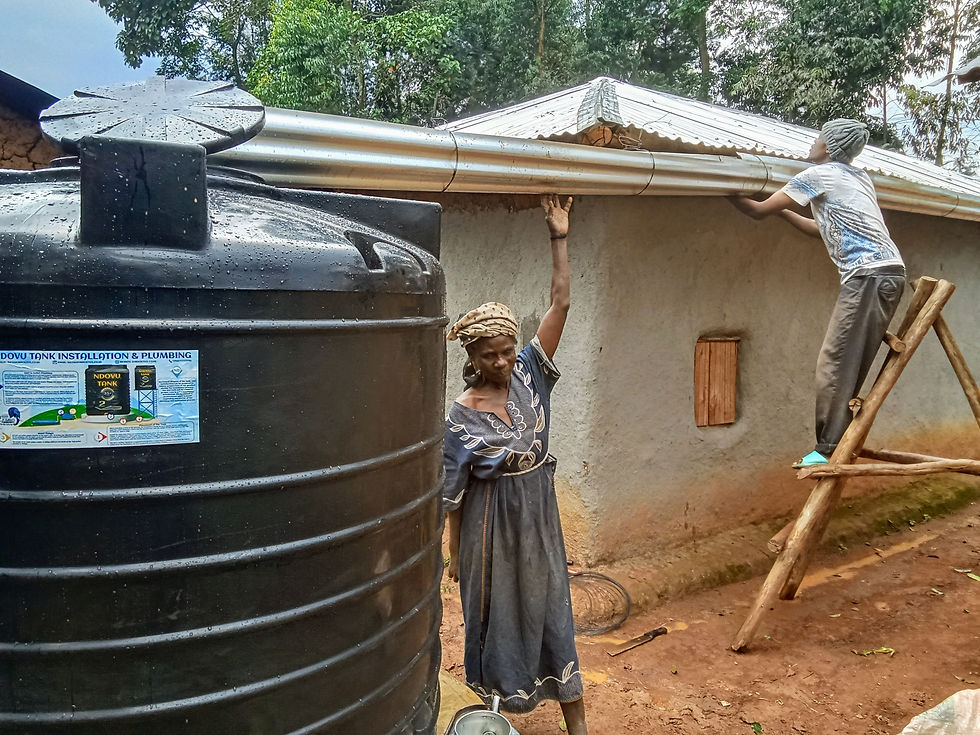
It would be very expensive to help drill wells for individual families in our program. That's why we help families harvest rainwater by providing materials for them to replace rusted old, leaking roofs (while often rebuilding their entire home). Decent shelter is the primary goal of these projects, but a new roof also provides the secondary benefit of a new gutter drainage system for rainwater collection.
Storing water
With new roofs and gutters, storing rainwater is practical.
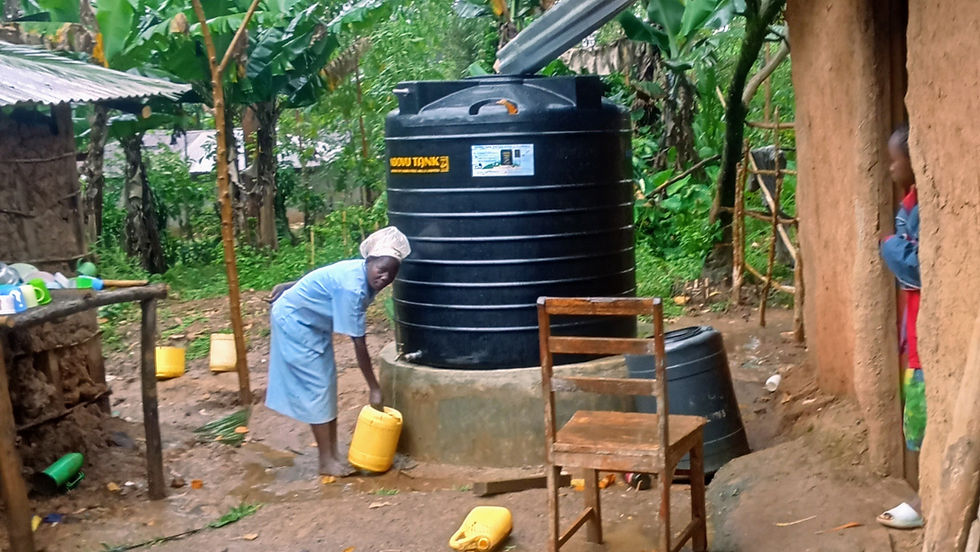
But families joining our program have on average less than 25 gallons of water storage. Usually, that's a few repurposed plastic cooking oil containers, which fill up in mere minutes during an evening thunderstorm.
As part of Family Care, every family receives a 525-gallon water storage tank. The process is collaborative, as families first do their share by building a concrete base slab. (Here's an update from last summer about how this collaboration works).
Drinking water
Through a partnership with Water = Life we provide drinking water filters to every family in our program.
The chances of catching waterborne illnesses are far from eliminated just because of drinking rainwater or spring water, instead of river water. But using a filter for drinking water comes close to eliminating all risks.
The specific water filter offered to families through our program is long lasting and does not need any parts periodically replaced. This writer, in fact, has used one for a number of years with great success.

UKR staff have learned to demonstrate water filters by using visibly muddy water, as this is a more convincing approach for somebody new than filtering unseen bacteria alone. When that same staff member happily drinks the clean water coming out, and mentions they use the same water filter at home every day, everyone watching wants to have and use their own.
Cleaning with water
Apart from drinking water, everyone needs water to clean their homesteads and their kitchenware, clothes, and selves.
Bathing rooms (and latrines)
UKR provides construction materials so families can build two-door, combination bathing room plus latrine structures. One stall is to take a bucket shower, and the other is to... release water.
Dish and utensil racks
Stacking up clean, wet dishes can create health hazards, yet dish drying racks are quite rare among families facing much greater problems. Our Family Care program guides families in building simple utensil racks to dry out cleaned dishes in the sun.
Hand washing stations
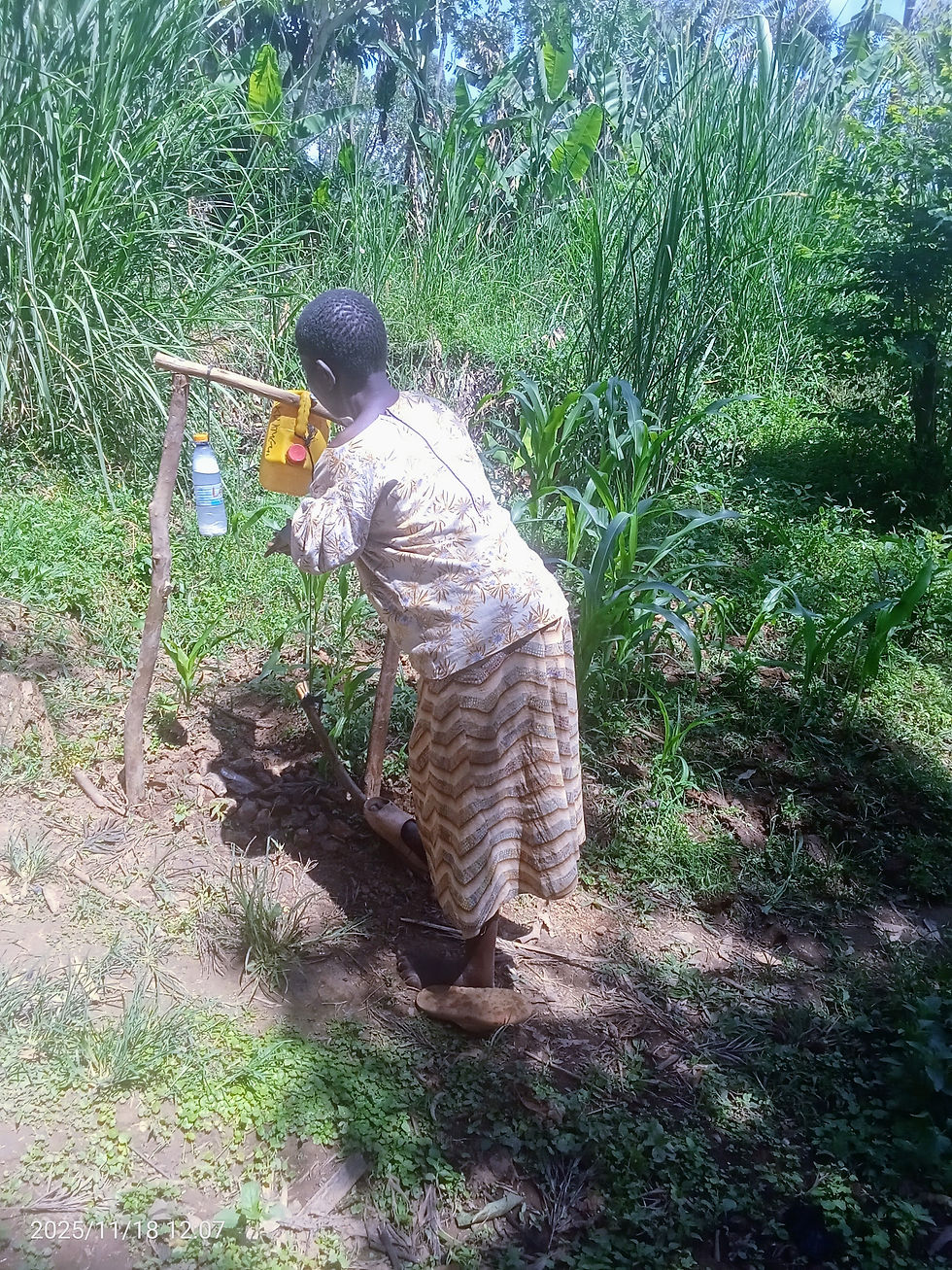
UKR's Public Health team helps families build simple, hygienic hand washing stations that use a foot pedal to tilt a jug. This simple Covid-era innovation is much better than holding a jug in one hand (and possibly contaminating it) while washing the other hand. Locally made liquid soap is then hung in an old water bottle, with a pinhole in the top for pouring.
Sheltering from water
Family Care helps families rebuild their homes to be strong and dry.
When the season of daily thunderstorms is in full swing - like it is right now - families find their stronger houses a godsend protecting children and possessions from screaming wind and battering rain.
Growing food with water
For farmers reliant on rainfall, the climate in western Kenya is not as friendly as it once was. Very often, things are still ‘just right’ - neither too wet nor too dry. But increasingly, they're also not. Rain will now disappear for weeks or deluge for days. It takes new knowledge to sometimes divert and sometimes conserve the varying intensity of water that pours down from above.
Utilizing abundant rainfall
The rainy and tropical climate means most small farms in western Kenya can potentially grow a lot more food, fodder, animals, and trees. This intensification of farming is generally a virtuous cycle, a type of diversified, permacultural, 'full-circle' system.
But achieving this higher production takes a lot of know-how and resources, which is where UKR's farm team steps in with comprehensive training so that families can make the most of their blessed climate.
Managing excess water flow
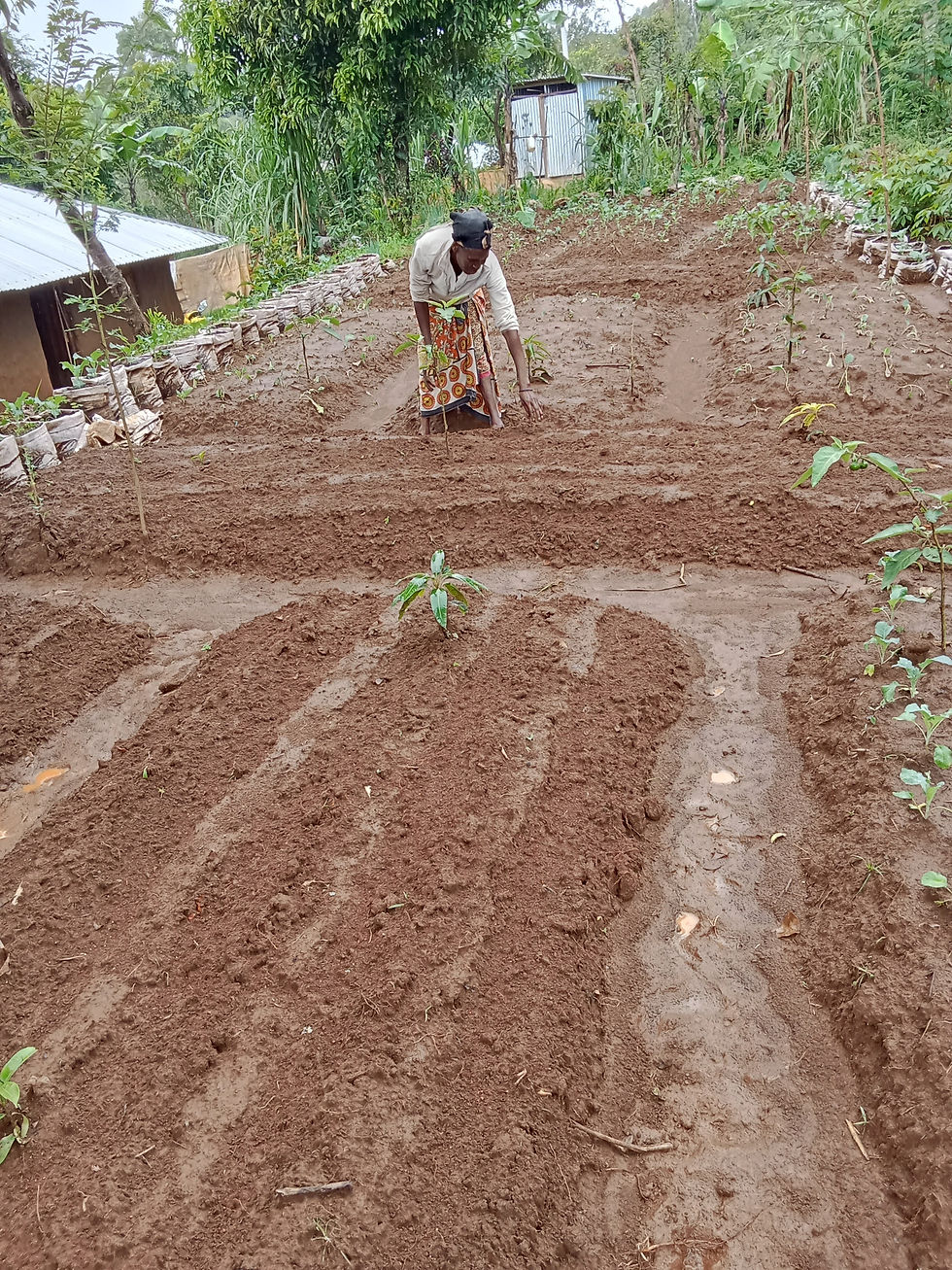
In western Kenya, drainage channels are essential to every successful farm. Without them, intense rains can sweep away fertilizer and seeds into Lake Victoria, by way of streams and rivers. But carefully planned rows, furrows, and drainage channels can overcome this problem.
Conserving water when it's scarce
Organic compost and animal manure are key to improving water retention in soil. UKR's farm program trains families on building sack gardens and raised beds with good soils, as well as 'sunken beds' in some places - helping farmers retain water longer in droughts and making it easier to hand-water plants during dry spells.
Water for farm animals
UKR helps families build animal structures like pigstys and cowsheds to help livestock shelter from intense rain.
But shelter from rain does not mean water isn't needed for animals within. That's where water storage tanks come into play once more, making it easier for families to keep their animals and pens clean. Not to mention, do you know how much water a cow drinks on a hot day? Maji ni maisha; water is life.

This 5 gallon serving of water is only enough for the morning
Leveraging year-round water (for those with the good luck of having it)
A small portion of UKR families live along rivers or year-round streams. For them, having water available all year presents a number of opportunities. During dry spells, they can more easily raise animals and irrigate veggies by hand.
The greatest opportunity from having year-round water may be in fish ponds, a niche that few western Kenyan farmers have explored. These ponds are skyrocketing in popularity among UKR families, who are observing and learning from their peers in our program who have found success raising fish.
Living by the rhythm of rain
Go home, now
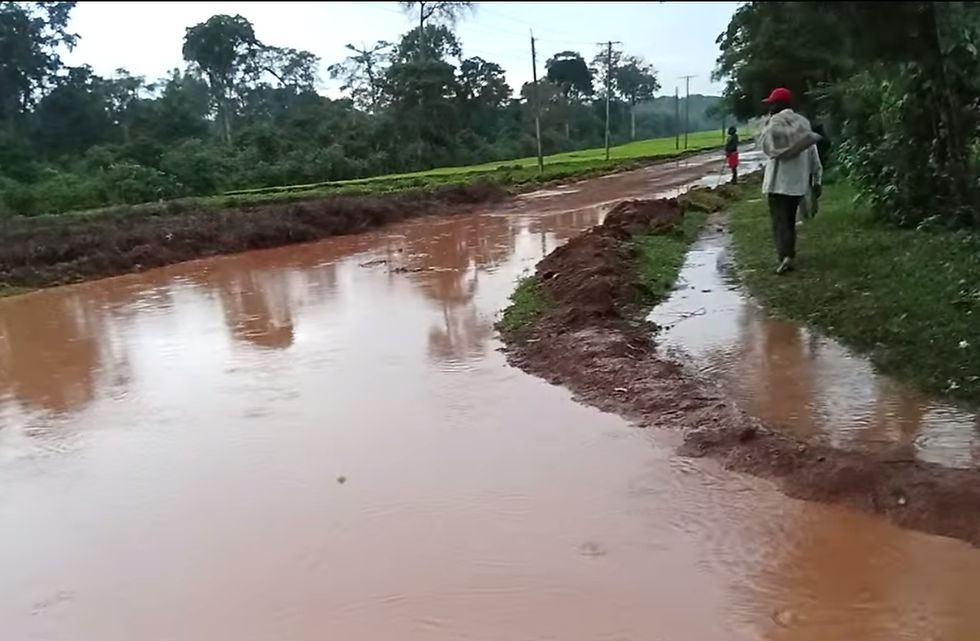
Where most people walk, and where roads turn to mud or flood in daily rains, heavy clouds forming in the late afternoon sky signal that it's time to go home now. It sounds lyrical but it's actually very challenging.
When skies suddenly darken in the afternoon or evening hours, there's a fire under the whole society's feet. Motorcycles race by and children run past at full tilt, while growing gusts of wind indicate little time left. Everyone wants to be home before the day's thunderstorm. Because if they're not, it means sheltering under a stranger's roof for an hour and then trudging home in the mud - and maybe in the dark too.
This phenomenon affects UKR staff as well as the families they serve. The schedules of staff visiting families in the rural areas vary greatly based on that day's weather, and it's common for a day's work plan to be cut short by rain.
On Fridays in the office, workdays end at 5:00. Or at 4:15, if rain is coming. Or at 6:00, if rain comes suddenly and traps people in the office before they can hurry home.
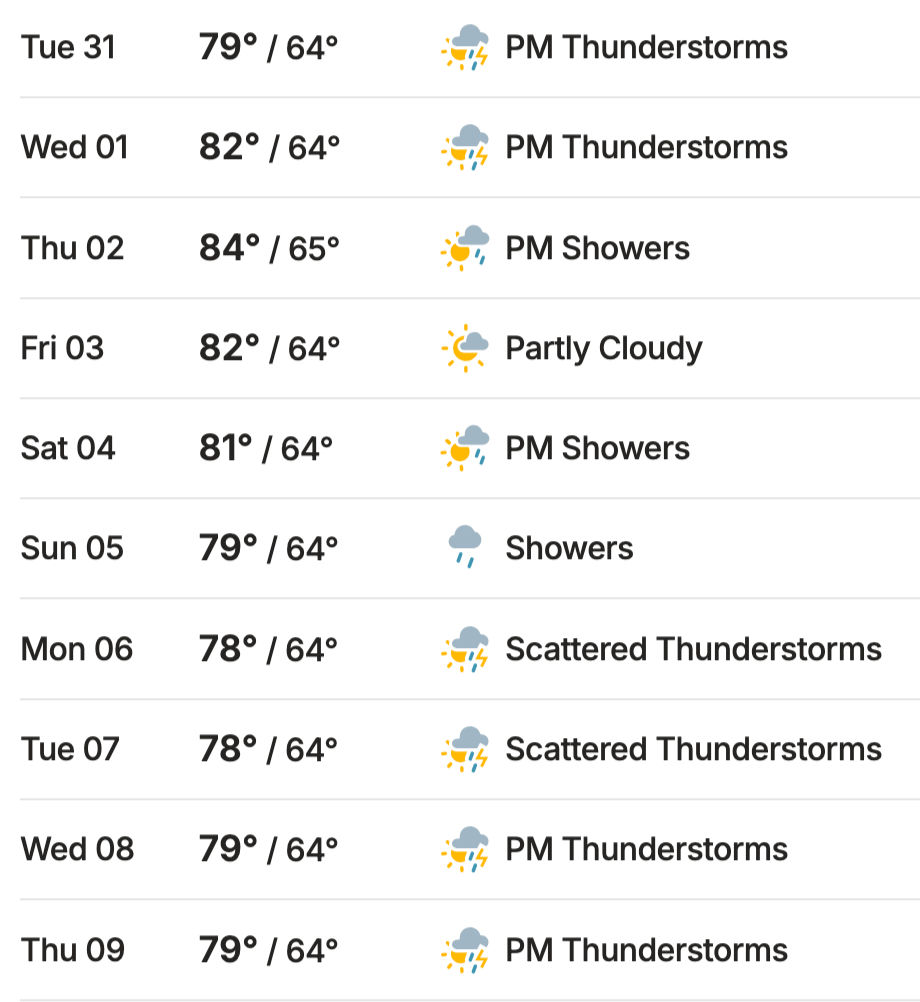
The rhythm of it all - from the village and small farms to offices in town - just depends on each day's rain.